
“Design and build” – the key to successful public construction projects
5/29/2024
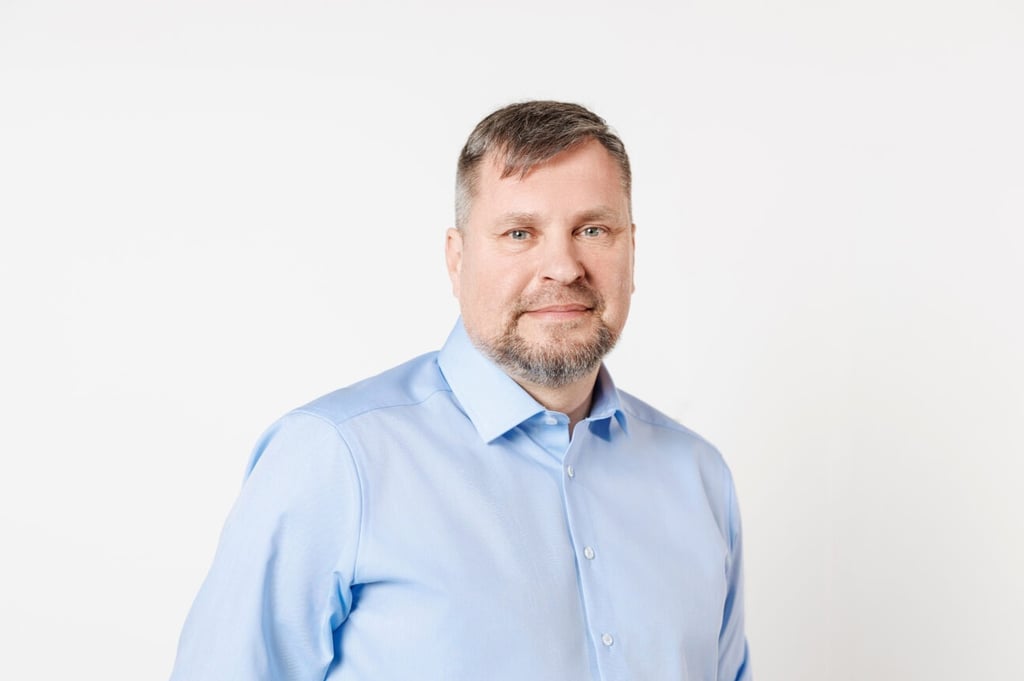
Juris Frīdmanis, member of the board, SIA Nordes Būve
Construction is a complex, multi-stakeholder process. The principal participants are the client, the designer, the contractor, and the construction supervisor, who represents the client’s interests onsite. In large public construction projects, challenges most frequently emerge during the active construction phase. When implementing the designer’s concept, contractors often identify deficiencies in the design documentation or encounter circumstances that were not foreseen at the design stage.
In such situations, the client must make timely decisions to prevent disruption of the construction process. This typically requires amendments to the construction project, which may result in significant financial consequences and delays. However, clients do not always possess the technical expertise necessary to determine the most appropriate course of action. It is unreasonable to expect hospital administrators, police departments, or social institution managers – highly qualified professionals in their respective fields – to also be experts in complex construction processes.
In these circumstances, the most effective way forward is often the design-and-build approach, under which responsibilities are consolidated within a single supplier.
Under the design-and-build model, instead of procuring design and construction services separately, the client selects a contractor capable of providing both competencies. The supplier develops the construction documentation and executes the works, assuming full responsibility for the final result.
This approach significantly shortens the timeline from concept to completion, as only one procurement procedure is required instead of two. Potential disputes between designer and contractor are minimised, since the design team works in close coordination with the construction team from the outset, jointly optimising functionality, materials, technologies, and cost efficiency.
The design-and-build model also eliminates the possibility of the contractor attributing delays or deficiencies to design shortcomings or insufficient author supervision, as responsibility rests with a single party. The client’s role becomes more strategic: defining clear project requirements and appointing a competent construction supervisor to oversee daily operations and quality control.
Moreover, the model enables the introduction of innovative and cost-efficient solutions, often resulting in a higher-quality end product at optimised cost. Design-and-build contracts are typically fixed-price agreements with clearly defined completion deadlines, facilitating structured and efficient management of project modifications.
While this approach is not universally applicable, it substantially increases the likelihood of timely and high-quality delivery in large-scale public infrastructure projects.
In Latvia, several major infrastructure projects have already been successfully implemented under this model. The largest example is the Ķekava bypass. In this case, the model was further expanded: the supplier not only designed and constructed the road but will also be responsible for its maintenance for 20 years. This long-term responsibility ensures a strong incentive to deliver the highest design and construction quality, as the contractor bears the long-term operational risk.
The design-and-build model is increasingly applied in infrastructure development. In addition to the Ķekava bypass, it is being used for the eastern border fence project and for the modernisation of the electrified railway network commissioned by VAS Latvijas dzelzceļš. The same approach is expected to be applied to the planned Bauska bypass project, which, like Ķekava, is envisaged as a public–private partnership.
This model should also be considered for large-scale public buildings of national importance, including hospitals, cultural institutions, and social infrastructure facilities. By balancing risks between the client and the contractor, the design-and-build approach increases the probability of delivering high-quality projects on time and within budget.
General contractor for projects of various scale, especially complex infrastructure and civil construction projects
© Nordes Būve copyright 2026
All rights reserved.