
German investor: improving tax policy could boost renovation of historic residential propertiesonda atjaunošanu
4/23/2024
“In order to promote the renovation of historic residential buildings in Latvia, it is necessary to improve the investment environment and introduce targeted tax incentives for investors willing to make substantial investments in this segment,” says Konstantin Panovko, a German investor and shareholder in SIA Nordes Būve.
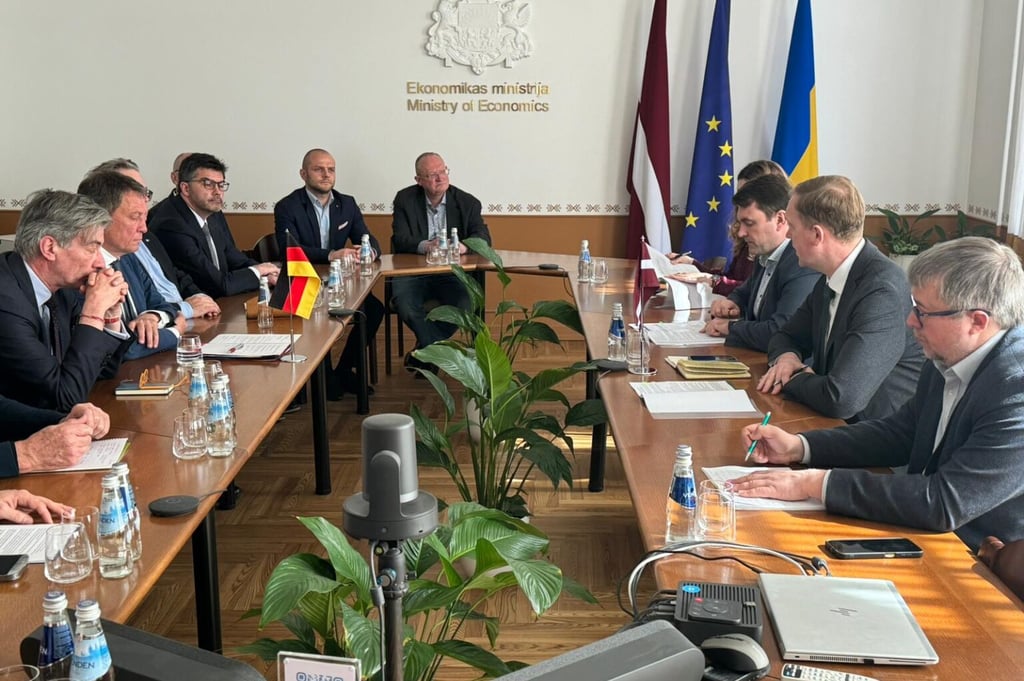
As part of a delegation from the German Eastern Business Association, Panovko met with representatives of the Latvian government and the Bank of Latvia. During discussions with the Minister of Economics, Viktors Valainis, he addressed potential policy measures to stimulate the restoration of historic buildings.
According to Panovko, renovation of historic residential properties in Latvia is currently stagnating. Bringing such buildings into compliance with modern environmental, safety and energy-efficiency standards requires significant capital investment, which under present market conditions is often not economically viable for private investors.
However, he believes that appropriate tax policy instruments could reverse this trend.
“At the time of the reunification of West and East Germany, many historic buildings were in poor condition. The government introduced substantial tax reductions for investments in these properties, making the sector attractive for private capital and accelerating renovation processes. Latvia could follow a similar approach; otherwise, an increasing number of buildings in Riga’s historic centre risk falling into disrepair,” Panovko notes.
He encourages policymakers to examine Germany’s experience more closely.
Renovated historic buildings significantly enhance urban attractiveness, benefiting both residents and tourism. This, in turn, supports the development of small and medium-sized businesses in central districts. Modernised residential buildings also create opportunities for high-quality rental housing, a segment currently underdeveloped in Riga.
“However, for such processes to take place, investors must see clear economic incentives. At present, the investment conditions in Latvia do not sufficiently encourage this type of long-term capital commitment,” Panovko emphasises.
The delegation of the German Eastern Business Association visited Riga in mid-April. During the visit, members met with German diplomats at the German Embassy in Latvia, as well as with the Latvian ministers for the economy, transport, and climate and energy, and representatives of the Bank of Latvia.
General contractor for projects of various scale, especially complex infrastructure and civil construction projects
© Nordes Būve copyright 2026
All rights reserved.